
 Image 1 of 4
 Image 2 of 4
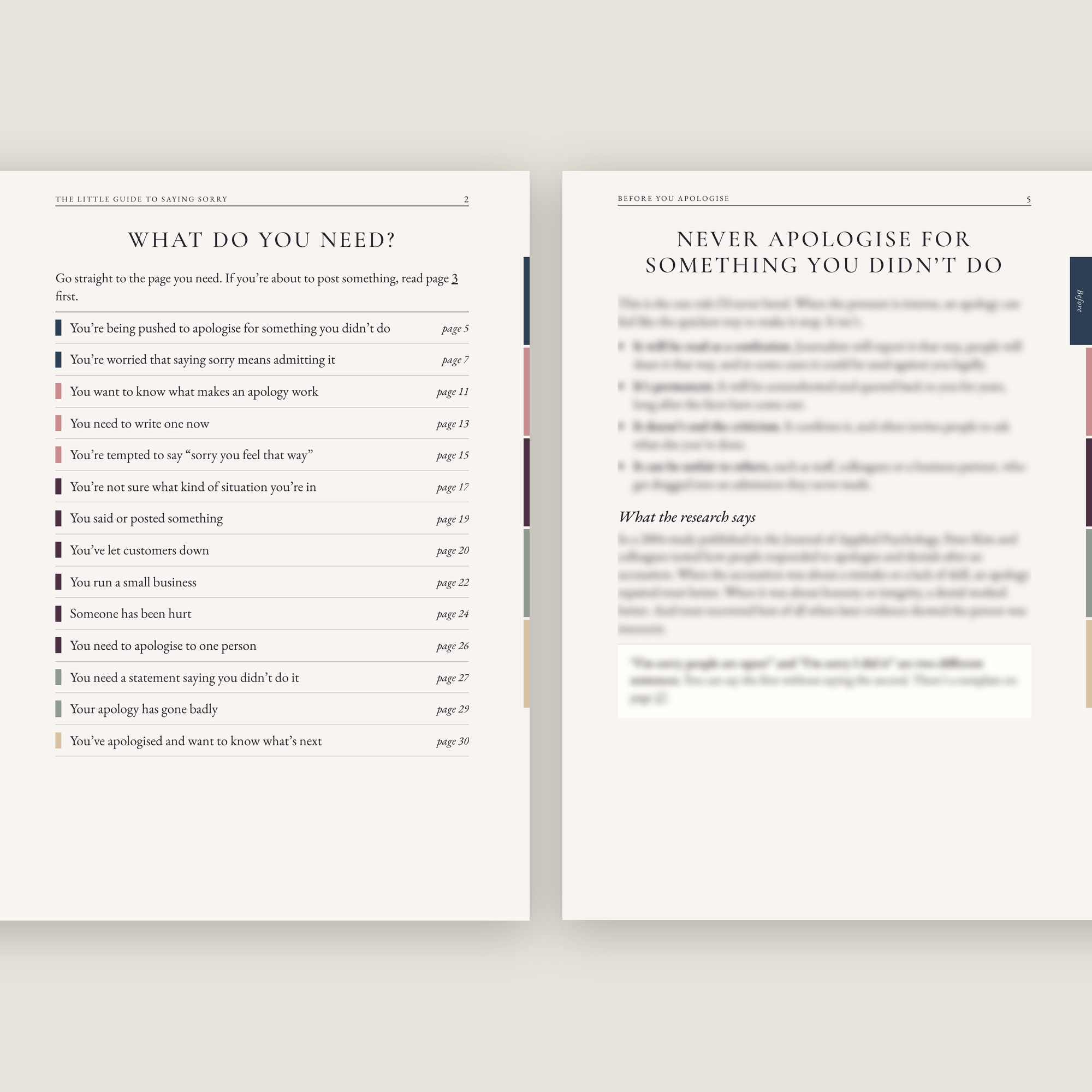 Image 3 of 4
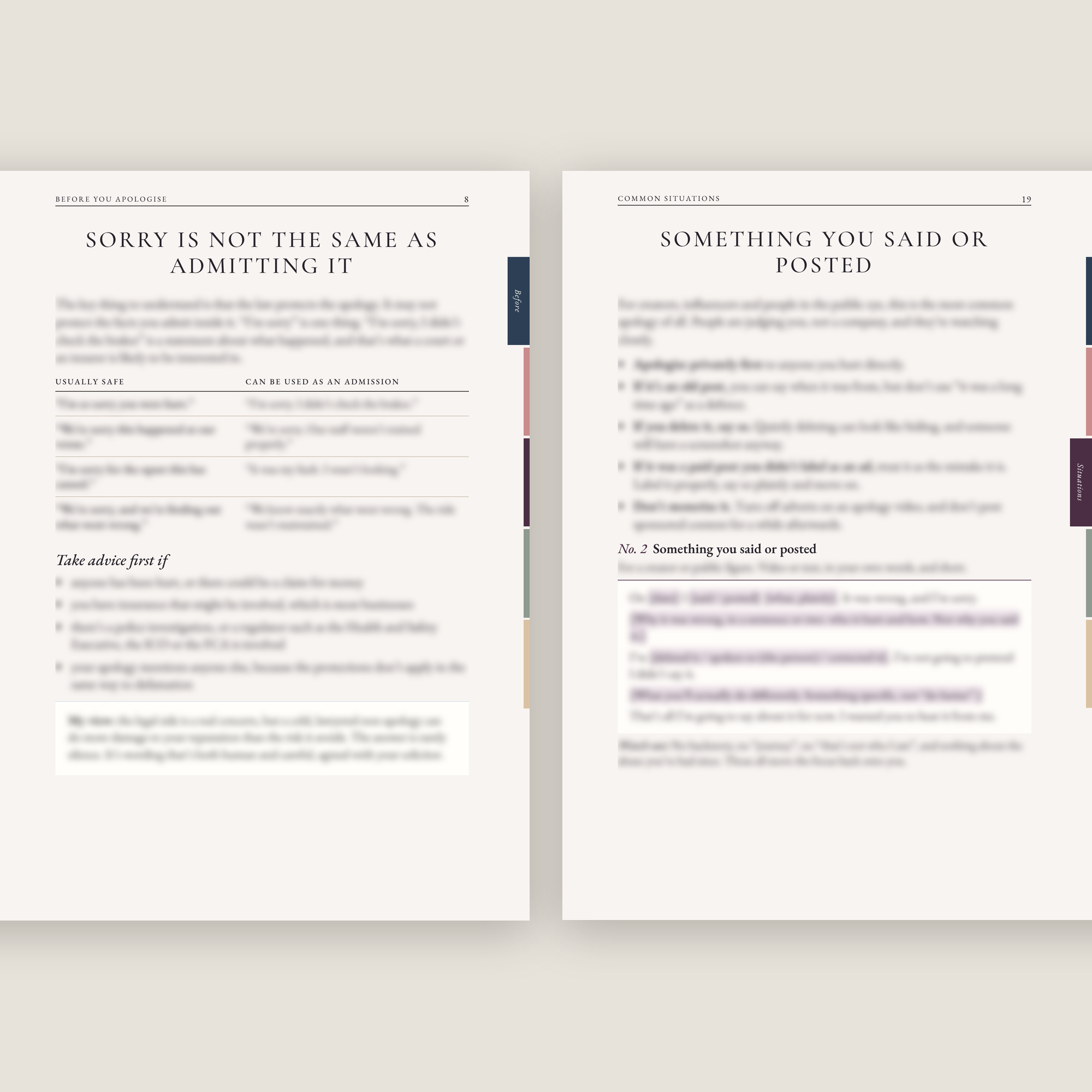 Image 4 of 4
A good apology can end a crisis in a day. A bad one can start a second, bigger one.
I’m Lauren Beeching, a crisis PR consultant. Every week I get emails from people asking for advice about an apology, and many of them are being pushed into saying sorry: by an employer, a brand, their audience or the people around them. Some have done something wrong. Quite a few haven’t.
This guide covers:
why you should never apologise for something you didn’t do, and what to say instead
whether saying sorry legally counts as admitting it, and the wording that can be used against you
what research shows makes an apology work, and why what you do matters more than what you say
why “I’m sorry you feel that way” backfires, and the other phrases that wreck an apology
the most common situations: something you said or posted, letting customers down, running a small business, a member of staff, and someone getting hurt
what to do when an apology goes badly, and how to come back afterwards
It comes with an editable Word file of 8 templates:
a short public apology
something you said or posted
an apology to customers
a message to your team
a statement after someone has been hurt
an apology to one person
a statement for when you haven’t done it
the follow-up almost everyone forgets
Every situation is different, and there’s no magic form of words that makes a mistake go away. This guide gives you the principles to get it right.