
 Image 1 of 2
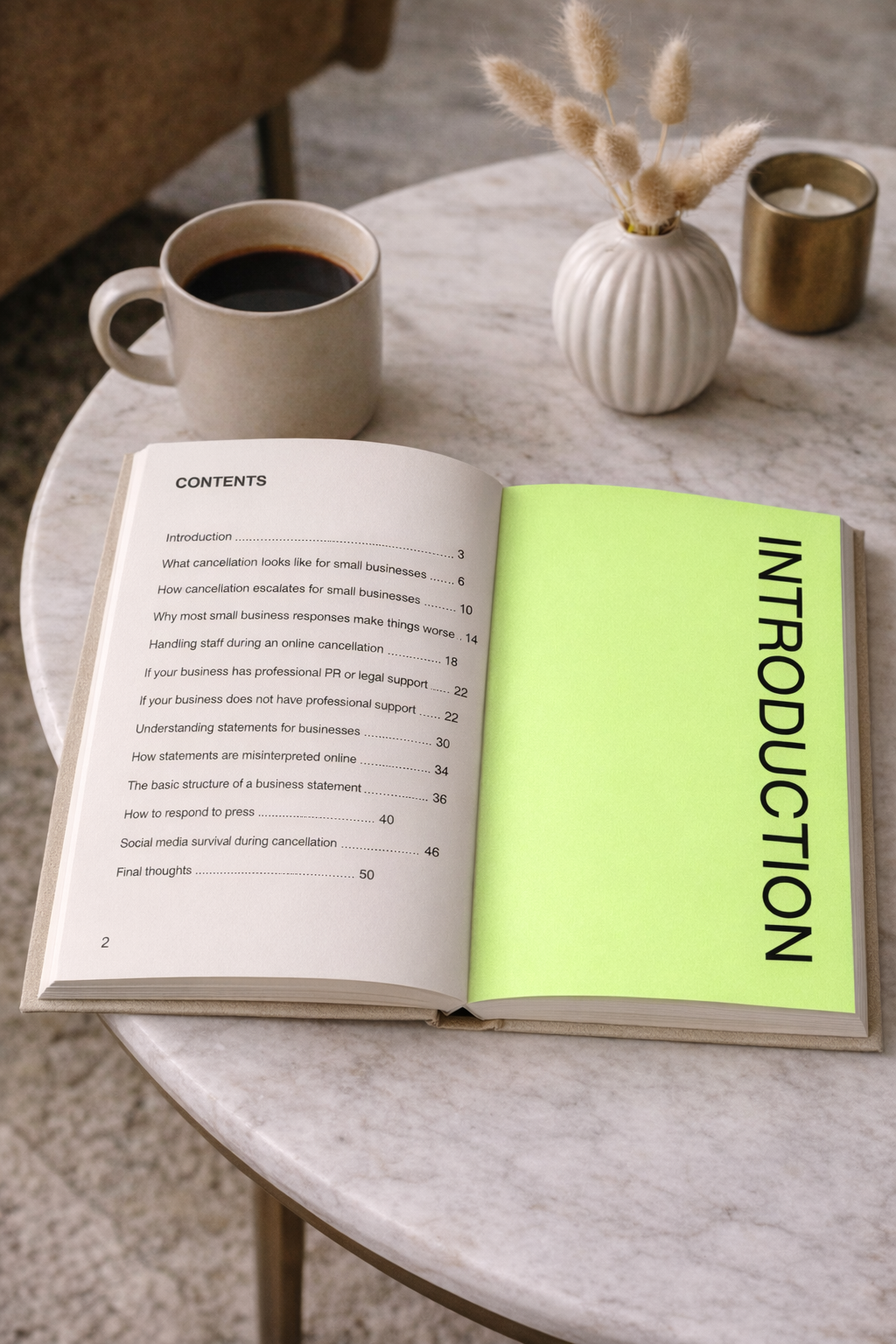 Image 2 of 2
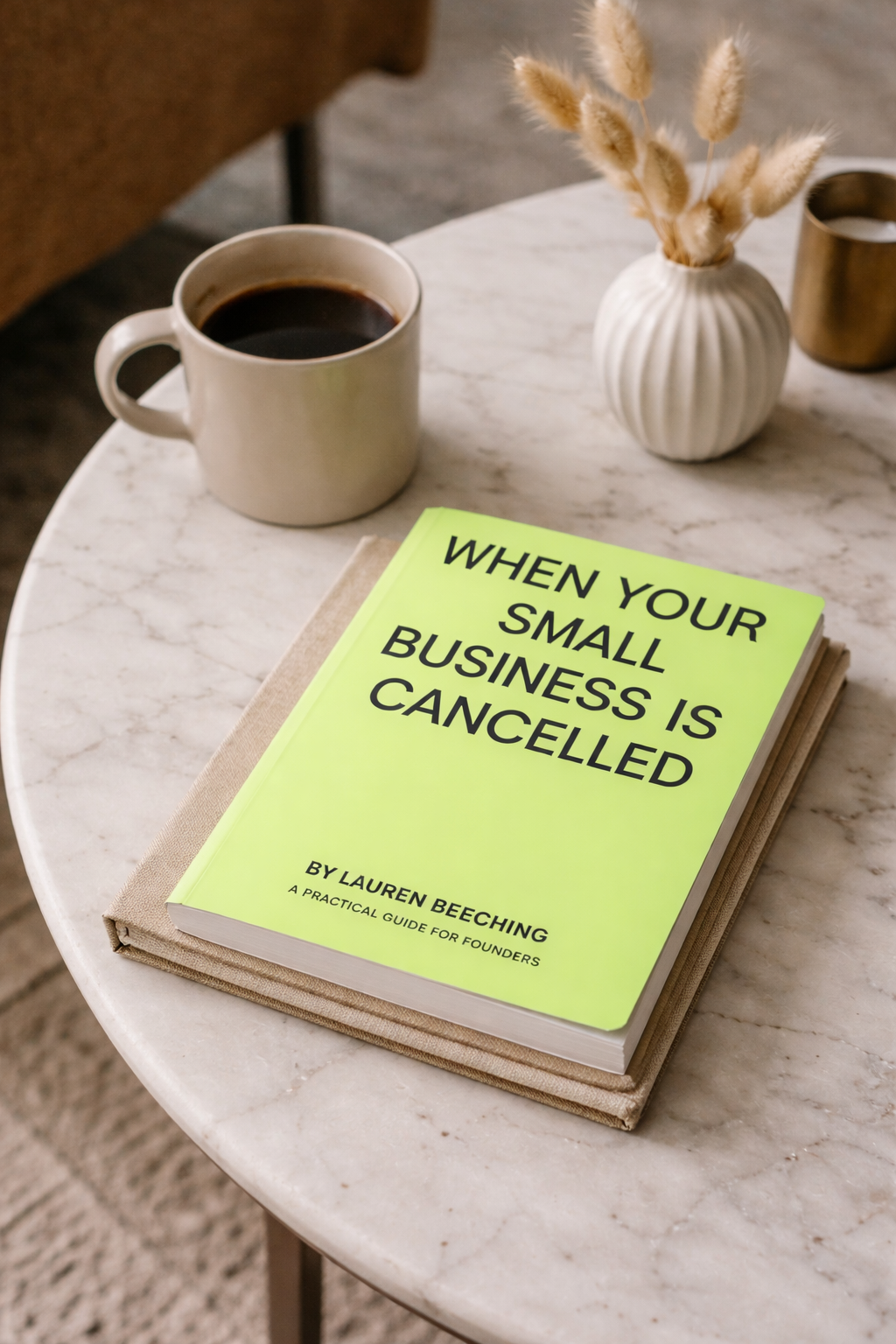
When your small business is cancelled is a practical, clear-headed guide for founders who suddenly find themselves on the receiving end of online backlash, misinformation, or sustained criticism, and don’t know what to do next.
Cancellation rarely arrives neatly. For small businesses, it often starts with a single post, review, or comment that spirals quickly, pulling in strangers, platforms, staff, and sometimes press, before there’s even time to understand what’s happening. Advice floods in from every direction, much of it well-meaning, most of it wrong.
This guide is designed to cut through that noise.
Written from a crisis PR perspective, it explains how online cancellation actually unfolds for small businesses, how narratives escalate, and why many instinctive responses quietly make situations worse. It walks through the realities founders face behind the scenes, from internal panic and staff uncertainty to public pressure to “say something” before it’s clear whether that’s necessary, or wise.
Inside, you’ll find clear guidance on assessing whether you’re dealing with real reputational risk or temporary online noise, how to think about silence versus statements, and how your words are likely to be interpreted once they leave your control. It covers how statements are picked apart online, how journalists approach small business controversies, and how reviews, platforms, and social media can amplify situations long after the original issue fades.
There is also specific, practical advice on handling staff during an online cancellation, setting boundaries internally, and protecting your team from unnecessary exposure, confusion, or fear while the situation unfolds.
This is not a legal template or a promise to “fix” cancellation. It won’t make criticism disappear or guarantee a perfect outcome. What it will do is help you slow things down, avoid common mistakes, and make decisions based on reality rather than panic.
If you’re a founder who wants a calmer, more informed understanding of what’s happening, what actually matters, and what can safely be ignored, this guide gives you a grounded place to start.
When your small business is cancelled is a practical, clear-headed guide for founders who suddenly find themselves on the receiving end of online backlash, misinformation, or sustained criticism, and don’t know what to do next.
Cancellation rarely arrives neatly. For small businesses, it often starts with a single post, review, or comment that spirals quickly, pulling in strangers, platforms, staff, and sometimes press, before there’s even time to understand what’s happening. Advice floods in from every direction, much of it well-meaning, most of it wrong.
This guide is designed to cut through that noise.
Written from a crisis PR perspective, it explains how online cancellation actually unfolds for small businesses, how narratives escalate, and why many instinctive responses quietly make situations worse. It walks through the realities founders face behind the scenes, from internal panic and staff uncertainty to public pressure to “say something” before it’s clear whether that’s necessary, or wise.
Inside, you’ll find clear guidance on assessing whether you’re dealing with real reputational risk or temporary online noise, how to think about silence versus statements, and how your words are likely to be interpreted once they leave your control. It covers how statements are picked apart online, how journalists approach small business controversies, and how reviews, platforms, and social media can amplify situations long after the original issue fades.
There is also specific, practical advice on handling staff during an online cancellation, setting boundaries internally, and protecting your team from unnecessary exposure, confusion, or fear while the situation unfolds.
This is not a legal template or a promise to “fix” cancellation. It won’t make criticism disappear or guarantee a perfect outcome. What it will do is help you slow things down, avoid common mistakes, and make decisions based on reality rather than panic.
If you’re a founder who wants a calmer, more informed understanding of what’s happening, what actually matters, and what can safely be ignored, this guide gives you a grounded place to start.