
 Image 1 of 2
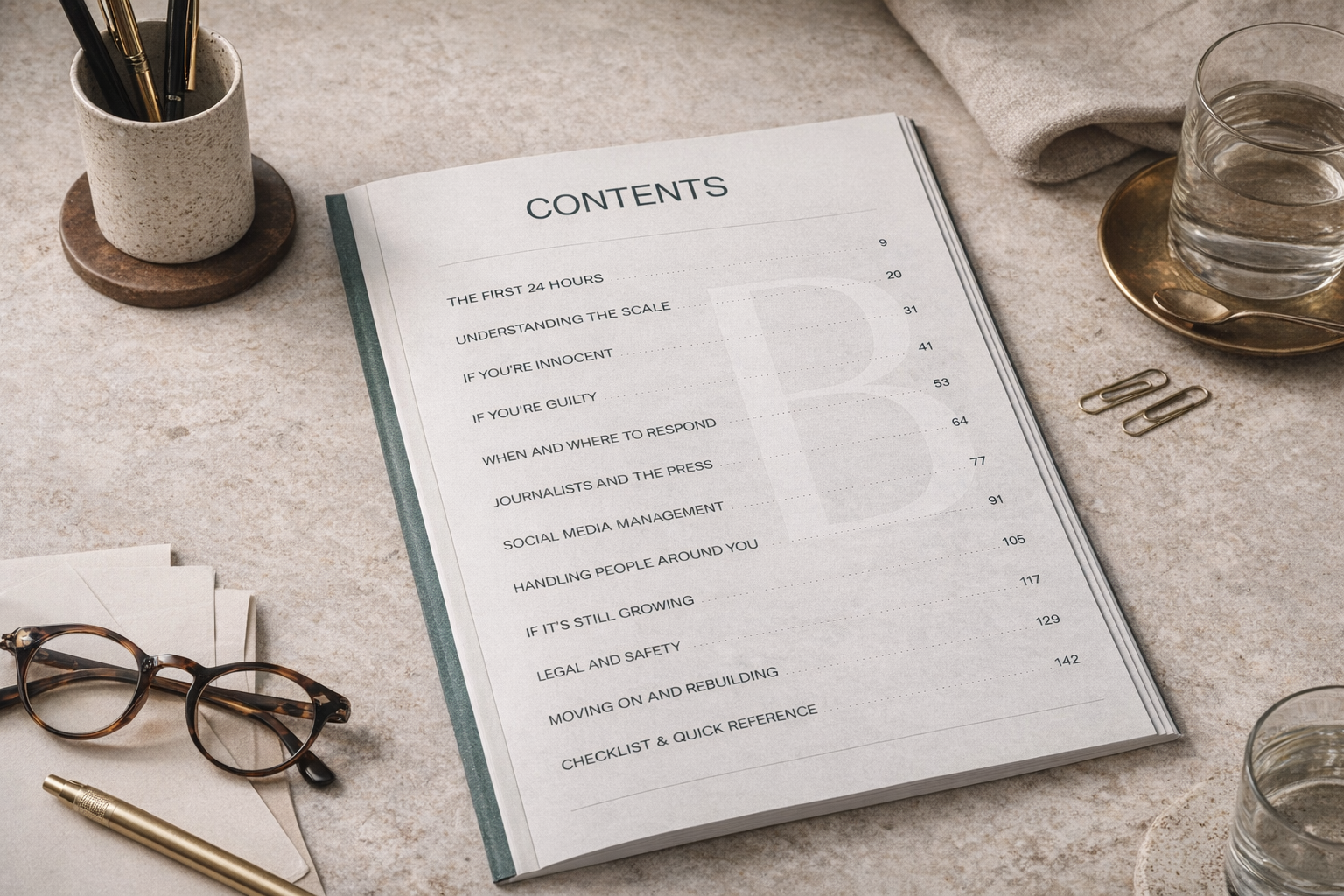 Image 2 of 2
Being cancelled rarely arrives neatly or clearly. It usually starts with confusion, conflicting advice, and a lot of noise from people who don’t actually understand how these situations unfold.
I’ve worked with individuals, businesses, founders, and creators who’ve found themselves dealing with online backlash, misinformation, or reputational pressure, often without knowing whether they’re facing a genuine crisis or a loud but temporary pile-on. One of the hardest parts is working out what actually matters, and what can safely be ignored.
This guide exists to bring clarity at that point.
It explains how cancellation actually works behind the scenes, how stories escalate, how journalists approach these moments, and why certain responses, even well-intentioned ones, quietly make things worse.
It also helps you think more clearly about silence, statements, monitoring, and timing, without pushing you toward public performances, panic posts, or over-explaining.
Of course, a PDF can only do so much. This guide won’t fix everything, make criticism disappear, or replace professional support where it’s needed. But if you’re not in a position to hire PR, want to understand what’s happening before deciding what to do next, or simply want a clearer, more realistic view of how cancellations play out, this is a grounded place to start.
It’s also useful for anyone who wants to understand how crisis PR actually works, beyond the myths and the advice people give online.
You’ll find:
– Clear guidance on the first 24 hours
– How to judge whether something is noise or real reputational risk
– What to say publicly, and when not saying anything is the safer option
– How journalists actually operate during cancellation cycles
– When silence protects you more than explanation
– Practical tools and checklists you can use immediately
This guide is written to help you slow things down, make fewer mistakes, and approach the situation with more control and perspective, rather than reacting out of fear.
Being cancelled rarely arrives neatly or clearly. It usually starts with confusion, conflicting advice, and a lot of noise from people who don’t actually understand how these situations unfold.
I’ve worked with individuals, businesses, founders, and creators who’ve found themselves dealing with online backlash, misinformation, or reputational pressure, often without knowing whether they’re facing a genuine crisis or a loud but temporary pile-on. One of the hardest parts is working out what actually matters, and what can safely be ignored.
This guide exists to bring clarity at that point.
It explains how cancellation actually works behind the scenes, how stories escalate, how journalists approach these moments, and why certain responses, even well-intentioned ones, quietly make things worse.
It also helps you think more clearly about silence, statements, monitoring, and timing, without pushing you toward public performances, panic posts, or over-explaining.
Of course, a PDF can only do so much. This guide won’t fix everything, make criticism disappear, or replace professional support where it’s needed. But if you’re not in a position to hire PR, want to understand what’s happening before deciding what to do next, or simply want a clearer, more realistic view of how cancellations play out, this is a grounded place to start.
It’s also useful for anyone who wants to understand how crisis PR actually works, beyond the myths and the advice people give online.
You’ll find:
– Clear guidance on the first 24 hours
– How to judge whether something is noise or real reputational risk
– What to say publicly, and when not saying anything is the safer option
– How journalists actually operate during cancellation cycles
– When silence protects you more than explanation
– Practical tools and checklists you can use immediately
This guide is written to help you slow things down, make fewer mistakes, and approach the situation with more control and perspective, rather than reacting out of fear.