
I think we were all hoping for a calmer year. By the 3rd of January, while most of us were still working out what day of the week it was, Donald Trump had posted a photograph of Venezuela's president, Nicolás Maduro, blindfolded on a US warship in a grey Nike tracksuit. The tracksuit sold out on Nike's US website within hours, which made it the best free PR Nike got all year, and certainly the strangest.
By the end of February, the US and Israel were at war with Iran, which I doubt was what many Republican voters had understood by "America First". By November, the Republicans had lost both houses of Congress. Viktor Orbán lost power after 16 years, Andy Burnham became Britain's seventh prime minister in ten, and astronauts made it round the Moon and back before London managed to pedestrianise part of Oxford Street.
Brooklyn Beckham's falling-out with his parents meant I did more than 15 interviews in one day, most of them about his mum's dancing at his wedding. Ed Sheeran had to explain why the owner of an American football team got a say in who opened for him. PETA thanked Kelly Clarkson for choosing a $15,000 mechanical bird she never actually bought. The president of France filed an 88-count lawsuit against Candace Owens that, among other things, takes issue with an E.T. doll in a blonde wig. And I've watched Turning Point USA since Charlie Kirk's assassination with the slightly guilty fascination usually saved for reality TV: pyrotechnics, sequins, and a leaked recording of Erika Kirk going through the merchandise sales from her husband's memorial.
So here’s my month-by-month rundown of the PR stories of 2026. Some of these stories felt enormous at the time, and I’d forgotten half the details by the time I sat down to write this… So, If you’re ever in the middle of a PR crisis, I hope you find that thought at least a little reassuring.
I’ve probably missed a few, including some I went on television and described as unforgettable. In my defence, quite a lot happened.
January
The year began with Zohran Mamdani taking office as mayor of New York and the US capturing Nicolás Maduro. By the end of the month, the US Justice Department had released more than three million further pages relating to Jeffrey Epstein. In between, an extraordinary amount of British airtime was devoted to what Victoria Beckham may or may not have done on a dance floor.
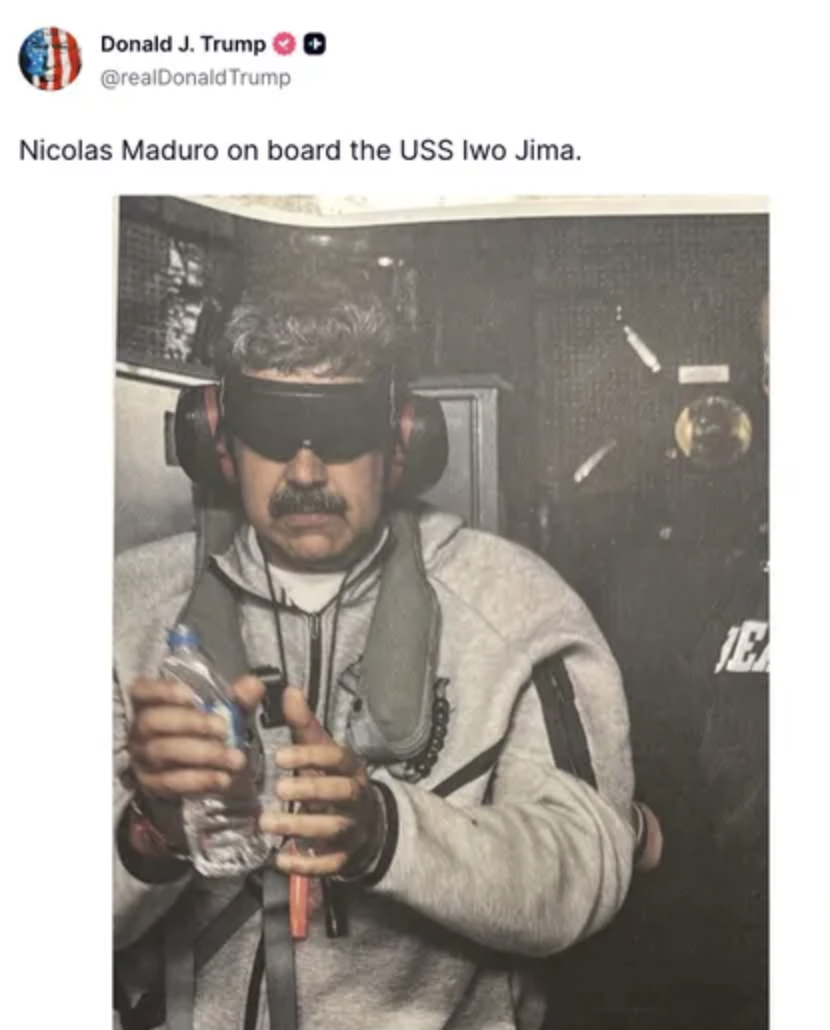
Trump, Maduro and the Nike tracksuit. On 3 January, after US forces captured Venezuela’s president, Nicolás Maduro, Donald Trump posted a photograph of him blindfolded aboard a US warship, wearing ear defenders and a grey Nike Tech Fleece tracksuit. As a statement of American power, it was fairly unambiguous. What I doubt Trump anticipated was how many people would look at that photograph and want to know where they could buy the tracksuit. It reportedly sold out in several sizes. Nike managed to get its product into one of the most widely discussed photographs of the year without anyone at head office having to approve what I suspect would have been quite a difficult campaign.
X and Grok. People were using Grok, the AI tool built into X, to create sexualised images of real people without their consent. Some of the images involved children. Ofcom opened a formal investigation on 12 January, and Elon Musk said he personally wasn’t aware of any naked underage images generated by Grok. X subsequently introduced restrictions. What bothered me about the response was how much of it relied on the fact that users had asked Grok to do it. If a woman finds a fake intimate image of herself circulating on your platform, I doubt it makes much difference to her whether your software came up with the idea. She wants the picture taken down and a reason to believe nobody can do it to her again.
Nestlé’s baby formula recall. Nestlé recalled batches of infant formula, including SMA products in the UK, over possible contamination with a toxin called cereulide. Over the following weeks, the number of countries affected grew considerably. Nestlé described the recall as precautionary, which is the sort of word that probably feels reassuring when you’re the person approving the statement. If you’re a parent standing in your kitchen at two in the morning, your questions are rather more specific. Is it the tin I’ve got? What if my baby has already had some? Where will you tell me if the advice changes tomorrow? I’d have put those answers above anything Nestlé wanted to say about itself.
Ryanair v Elon Musk. Michael O’Leary said Ryanair wouldn’t be installing Musk’s Starlink Wi-Fi because of the extra drag and fuel costs. Musk called him an “utter idiot” and floated the idea of buying the airline. O’Leary responded by putting Musk’s face on a seat sale. I suspect most chief executives would have had a fairly tense conversation with their board for doing that. At Ryanair, I’d have been more surprised if they’d missed the opportunity to sell me a flight. It worked because it sounded exactly like them, and because nobody caught in the middle of this particular row had been harmed. Two rich men calling each other idiots is fairly low stakes for the rest of us.
The Beckhams. This was one of the biggest celebrity stories of the year and a very busy day for me. I think I did over 15 interviews that day. On 19 January, Brooklyn Peltz Beckham posted a six-part statement on Instagram saying he didn’t want to reconcile with his parents. He claimed they’d tried to ruin his relationship with Nicola, pressured him to sign away rights to his name before the wedding and put “Brand Beckham” first. He also said Victoria had pulled out of making Nicola’s dress at the last minute and had “hijacked” their first dance.
For me, it was a good example of why a long, emotional statement is usually a disaster. I understand the temptation to include every detail, particularly if you feel people have spent years telling your story for you. The trouble is that people will go through every word looking for something they can disprove. Within days, the wedding DJ was on This Morning explaining that Marc Anthony had called Victoria up on stage and that, in his view, what was inappropriate was the timing. He also said Nicola left in tears. There was room in his account for Brooklyn to have been genuinely hurt, but by then the conversation had become an inquiry into the precise circumstances of a wedding dance.
I think David and Victoria were right to resist answering him point by point. One of Brooklyn’s main accusations was that his parents used the press to control the family’s story. Imagine trying to rebut that by giving a newspaper your version of your son’s wedding.
The Epstein files. On 30 January, the US Justice Department released more than three million further pages relating to Jeffrey Epstein. That’s an extraordinary amount of material. Yet if you release documents in batches, people know there’s more to come, and parts of what they can read are blacked out, the obvious question is, “What’s to hide?”
Victims are entitled to their privacy, and identifying details should be protected. What I find frustrating is how difficult it is for someone reading a page covered in black boxes to know what each one is there for. The department had already announced in December 2025 that more than a million additional potentially relevant documents had turned up. By November 2026, Congress was still examining how the files had been handled. I think we’ll be talking about this for years. Every time another batch appears, people quite reasonably go back to the previous one and wonder what else they weren’t told.
February
The Winter Olympics opened in Milan and Cortina. In Britain, Peter Mandelson and Andrew Mountbatten-Windsor were arrested within days of each other. On 28 February, the US and Israel attacked Iran.
Peter Mandelson and Downing Street. Documents raised questions about whether Mandelson had passed government information to Epstein while serving as a minister. He resigned from the Labour Party and the House of Lords, and on 23 February was arrested on suspicion of misconduct in public office. He has denied wrongdoing. For Downing Street, there was a separate question it could answer without waiting for the police. Why had Keir Starmer thought Mandelson was the right person to appoint as ambassador to Washington? Starmer apologised, his chief of staff resigned and his communications director left the following day. That was his fourth communications director. At some point, after going through that many people employed to explain your decisions, it’s worth looking at the decisions you’re asking them to explain.
Andrew Mountbatten-Windsor. The former Prince Andrew was arrested on his 66th birthday on suspicion of misconduct in public office, relating to claims that he shared confidential information with Epstein while working as a trade envoy. He was released and has denied wrongdoing. The King’s response was that the law must take its course. I thought it was well judged. Anyone reading it could understand that the Palace would cooperate and that the King wasn’t going to use his position to answer on his brother’s behalf. A longer statement would have invited questions he was in no position to answer.
When the money started moving. Casey Wasserman announced plans to sell his talent agency after his past correspondence with Ghislaine Maxwell attracted scrutiny. Thomas Pritzker stepped down as executive chairman of Hyatt, acknowledging poor judgement over his association with Epstein and Maxwell. Some familiar names from my own industry appeared in the files too. Being named in a document tells you very little on its own. What interested me professionally was how quickly clients and boards began asking questions about judgement. When your business depends on other people trusting your advice, who you’ve chosen to associate with is a reasonable thing for them to ask about.
Tyra Banks. Netflix released Reality Check: Inside America’s Next Top Model, and Banks took part. I can see why she agreed to it. A lot of the people watching had loved that programme and were probably quite open to hearing how she felt about it years later. She acknowledged that she’d gone too far at times, suggested viewers had wanted more and ended up teasing another series. She later sued Netflix. The part I’d have encouraged her to sit with for longer was what she owed the contestants. The audience might well have enjoyed watching. The young woman standing in front of the judges still had rather less power than anyone making the programme.
Bad Bunny. On 1 February, Bad Bunny won Album of the Year at the Grammys for Debí Tirar Más Fotos, the first Spanish-language album to win it. A week later, he headlined the Super Bowl. I thought he was brilliant, particularly towards the end when he said “God bless America” and the next word out of his mouth was “Chile”. I think most of us hear that phrase and picture the United States, especially halfway through the Super Bowl. Hearing him name countries from Chile and Argentina right up to Canada was such a simple way to remind us how much more of the world “America” can mean.
It reminded me of a party I went to with some Latino friends. I remember saying to one of them how welcome everyone had made me feel, and she said something along the lines of, “It’s a Latin party, Lauren. Everyone’s invited.” That’s how his halftime show felt to me. It was Puerto Rico’s party, and I was watching from London feeling very much invited.
McDonald’s and the very small bite. McDonald’s chief executive Chris Kempczinski filmed himself trying the Big Arch, referred to the burger as a “product” and took what can only be described as a fairly cautious bite. Burger King’s president responded by taking an enormous bite of a Whopper. I’m sure there were perfectly sensible reasons for wanting a tidy shot of a chief executive eating on camera. Unfortunately, by the end of the video I knew he could describe the burger and still had absolutely no idea whether he liked it.
Heathrow. Asked about overcrowding, Heathrow’s chief executive Thomas Woldbye was reported as suggesting that passengers were walking the wrong way. I’d be inclined to ask a follow-up. If enough passengers are walking the wrong way to congest an airport terminal, who’s in charge of the signs?
Dirty Business. Channel 4’s drama about sewage in England’s rivers reached millions of viewers by telling the stories of the families and campaigners affected. The water industry has had years to explain itself, with considerably more access to the facts than any viewer at home. Yet a family describing what happened to them is much easier to understand, and remember, than a performance report. After something like that airs, I’d want a water company to take me back to one of the rivers in the programme and show me what had changed. I can read its commitments on its website any time.
The BBC and the BAFTAs. This was another one I’d include. At the BAFTAs, an involuntary tic from Tourette’s campaigner John Davidson led to a racial slur being heard while Michael B. Jordan and Delroy Lindo were on stage. The BBC showed the ceremony on a delay, but the slur still went out and remained on iPlayer for hours. Davidson was mortified. Jordan and Lindo had been subjected to it in front of their peers. Both deserved more consideration than they got. The part I struggled to understand was why so much of the public argument fell on the people in the room when the broadcaster was the one with the ability to edit what millions of people subsequently heard.
Turning Point USA. You know when you’re walking down the street and see something so odd that you know you should keep walking, but you can’t help turning round for another look? That’s how I feel about Turning Point USA, the conservative organisation Charlie Kirk co-founded to bring young Americans into Republican politics. From a PR perspective, I think the way they’ve handled the past year has been atrocious.
When Charlie was assassinated, my heart broke for Erika and their two young children. I remember people who’d disagreed with practically everything he said expressing real sympathy for his family. Had she asked me, I’d have strongly advised her to stay offline for months and let someone else handle the press. A short statement a few months later would have been plenty. I presumed we wouldn’t hear from her for a year. She spoke publicly two days later and was named CEO of Turning Point eight days after he died.
Eleven days after Charlie was killed, his memorial filled a stadium in Arizona. Between the preaching and what sounded to me like a sales pitch for Turning Point, I kept having to remind myself it was a memorial. Then Erika walked out on stage and fireworks went off inside the stadium. It felt like something you’d see on South Park.
On 27 January, Candace Owens released leaked audio from an internal Turning Point call recorded less than two weeks after Charlie’s death. Erika described the memorial as the event of the century and told her team they’d sold more than 200,000 items, had over 50,000 hat orders to fulfil and had gained 300,000 new donors. “It’s weird to say, I’m excited,” she said, explaining that she saw God at work in the response. Listening to her laugh and talk through those figures, I thought she sounded like she was boasting. Hearing anyone speak that way about merchandise sales after their husband’s memorial was one of the strangest things I’ve ever heard.
By February, Turning Point was putting on its own Super Bowl halftime show after the NFL booked Bad Bunny. They booked Kid Rock and called it the All-American Halftime Show. Bad Bunny, for the record, is from Puerto Rico and is an American citizen. Turning Point celebrated nearly 20 million YouTube views by the following day. Out of curiosity, I looked up Bad Bunny’s performance while writing this. It was on 164 million. I thought he was brilliant.
Kim Jong-un, girl dad. North Korean state media gave us photographs of Kim Jong-un and his teenage daughter fussing over a puppy. We’d also seen her accompanying him to weapons events, and in March the two were pictured firing pistols at a munitions factory. South Korea’s intelligence service believed she had been chosen as his successor. Once you look at the photographs with that in mind, the puppy is at least as interesting as the pistol. People are being introduced to a potential future leader through pictures that, for a moment, look remarkably like ordinary family photographs. Quite a choice for a regime that controls so carefully what the rest of us get to see.
March
The war with Iran spread across the Gulf and fuel prices rose. In Britain, Sarah Mullally became the first woman installed as Archbishop of Canterbury.
Dubai’s influencers. As Iranian strikes hit the UAE, reassuring posts about Dubai began appearing across social media. At the same time, authorities warned against sharing footage of strikes, and LBC reported that some influencers were frightened to speak openly. I’m sure plenty of people posting sunny photographs did feel safe where they were. The problem for Dubai is that once viewers suspect people wouldn’t feel free to say they were frightened, even a completely sincere post starts to look like something they’ve been asked to put up. That’s quite a lot of trust to sacrifice for a few days of reassuring Instagram Stories.
Meghan and Netflix. Netflix stepped back from Meghan’s lifestyle business, As Ever, with a statement explaining that she would now take the brand forward independently, as had always been intended. I smiled at that wording because it’s such a familiar way to announce the end of a partnership. It lets both parties leave politely. The slight difficulty with telling people this was always the plan is that some of them will go back and read what you said when you announced the partnership in the first place.
Timothée Chalamet, the opera and the ballet. Chalamet said he didn’t want cinema to end up like ballet or opera, with people trying to keep something alive that “no one cares” about. Opera and ballet companies had every reason to be irritated. Instead, several showed people what they did and invited him along. This was one of my favourite responses of the year. Imagine how few people would have shared a statement expressing the Royal Ballet’s disappointment in Timothée Chalamet. Now imagine being offered the chance to see for yourself whether a man who’s annoyed half the performing arts has a point. I’d be quite tempted to book.
The Coldplay kiss cam, part two. In March, Kristin Cabot sat down with Oprah to discuss the footage of her at a Coldplay concert that went round the world in 2025. She spoke about the death threats and explained that her estranged husband had been at the same concert, a detail rather less widely known than the few seconds everyone had seen of her ducking out of view. I thought waiting was sensible. At the height of a story like that, people mostly want to hear you address whichever joke they’ve spent the morning sharing. By March, there was at least a chance they might listen to what it had been like to be the person in the clip.
The Palace hires a reporter. Buckingham Palace confirmed that Sky News royal correspondent Rhiannon Mills would become communications secretary to the King and Queen. I thought it was a particularly good appointment because she’d spent years on the receiving end of palace communications and had occasionally been critical of them. There’s real value in employing someone who can tell you, from experience, which part of a carefully worded royal statement is going to make an entire press room raise an eyebrow.
Justin Timberlake. Bodycam footage of Timberlake’s 2024 drink-driving arrest was released after he’d gone to court to try to prevent publication and subsequently agreed to a redacted version. Among other things, it showed him telling officers the sobriety tests were “really hard”. I can understand wanting an embarrassing video kept private. The question I’d have asked before going to court was how many people were still thinking about that arrest two years later, and how many more would want to see the footage once they knew he’d tried to stop them.
April
Artemis II took astronauts round the Moon, Viktor Orbán lost power in Hungary after 16 years, and King Charles addressed the US Congress. It was a particularly good month for anyone who enjoys watching a room full of politicians laugh slightly nervously at a British joke.
Katy Perry and Ruby Rose. Ruby Rose alleged that Katy Perry had sexually assaulted her at a Melbourne nightclub in 2010. Perry’s representatives strongly denied the allegation, and Victoria Police confirmed an investigation. What stood out to me in the response was the decision to bring up allegations Rose had previously made about other people. Perry is entitled to deny the claim in the strongest terms. I’d have advised her representatives to stop there. Once you start discussing the character of the person making an allegation, that becomes a separate editorial decision you’ll be asked to defend, regardless of what the investigation finds.
Kash Patel v The Atlantic. After The Atlantic published allegations about the FBI director’s drinking and absences, which he denied, Patel sued for $250 million. The magazine stood by its reporting. One critic joked that the lawsuit had finally persuaded him to read the article. That’s the part I’d want a client to consider before filing. There may be excellent reasons to bring a claim, particularly if a report is false and damaging. Just be prepared for the first practical consequence to be a considerable improvement in the publication’s readership figures.
The King in Congress. On 28 April, Charles became the first British monarch to address the US Congress since his mother in 1991. He made a serious case for NATO and support for Ukraine, in a room where he knew perfectly well that people disagreed, and received standing ovations from both sides. I thought it was the best speech of the year. What I particularly liked was that the humour made some fairly direct remarks possible. By the time people realised quite how pointed he’d been, some of them were already clapping.
Being told not to panic. As the war pushed up fuel prices and raised fears of shortages, Keir Starmer urged people to carry on as normal. I always think “don’t panic” is an interesting thing to say to someone who hadn’t, until that moment, considered panicking. The more reassuring part of Starmer’s message was his acknowledgement that people could still feel the financial effects after the immediate crisis had passed. I’m more inclined to trust someone who can explain what might get worse, particularly if they’re also asking me to believe them about what’s under control.
May
Eurovision turned 70, Donald Trump gave reporters a tour of the hole where the White House East Wing used to be, and Blake Lively and Justin Baldoni settled their legal dispute shortly before trial.
Blake Lively and Justin Baldoni. Both went into this with fairly decent reputations. Now people tell me they see either of them and immediately think of the lawsuit. Different details stick with different people. For me, it was the beyond obnoxious “dragons” text.
The people I felt for most were the crew. They’d turned up to do a job and pay their bills, and suddenly whole subreddits were picking apart who they followed on Instagram as if that proved they’d done something wrong. Private messages involving the editing team became public after a subpoena. I thought the way the crew were treated was atrocious, and I’m still surprised it wasn’t a bigger story. From the outside, Blake and Justin seemed so concerned with which of them would be seen to have won that neither appeared to give the crew a second thought. To me, that says a lot about both their characters.
They settled on 4 May, two weeks before trial, and issued a joint statement saying they hoped everyone could move on. Three days later, their lawyers were each telling the press they’d won. Lively alone later sought just over $8 million in legal fees and costs. The Los Angeles wildfires were still burning when Baldoni filed his countersuit. Imagine if they’d settled sooner and put even a fraction of that money towards helping families rebuild. It would have done some good and, frankly, it would have been far better PR for both of them.
James Charles. After Spirit Airlines shut down, a former employee sent James Charles a GoFundMe link and he called her lazy on TikTok. He defended himself, apologised, deleted videos, and then she published his private apology and said she didn’t accept it. What began with one message he was under no obligation to answer became several days of coverage about how he’d treated someone who’d just lost her job. He could have quietly closed his inbox and got on with his afternoon. Sometimes the advice really is that simple.
Swatch. The launch of Swatch’s Royal Pop pocket watch with Audemars Piguet drew such large crowds that shops had to close. Police used tear gas outside one location near Paris. Swatch subsequently pointed to the shopping centres’ handling of the crowds. I can see how a queue round the block looks lovely in the launch-day photographs, right up until somebody in it gets hurt. If you’ve deliberately made a product difficult to get and encouraged people to turn up in person, customers will reasonably assume you’ve had a conversation with the venue about what happens when your marketing works.
Eurovision. Here in the UK, Eurovision always felt like a bit of a laugh. We all knew the voting was political and often completely nonsensical, but I don’t remember anyone judging you for watching it. This year, even saying you were watching felt like taking a position. I imagine plenty of fans elsewhere in Europe felt much the same.
I spent most of the voting wondering who would turn up the following year if Israel won. Spain, the Netherlands, Ireland, Iceland and Slovenia had already pulled out. Spain is one of the Big Five, meaning its broadcaster is among Eurovision’s biggest financial contributors. Even within the delegations that did take part, some people weren’t exactly shy about saying they disagreed with Israel’s participation. I certainly can’t see those same people agreeing to go to Tel Aviv a year later. It would have been an absolute mess, and I think the organisers knew it. In the end, Bulgaria’s Dara won with Bangaranga. Israel came second.
I’ve written about this before, but it’s worth reading the European Broadcasting Union’s two explanations side by side. The day after Russia launched its full-scale invasion of Ukraine, the EBU excluded its entry because allowing it to compete would “bring the competition into disrepute”. I agreed. When it came to Israel, the EBU said its broadcaster met the rules and excluding it would be a “political decision”. By the time five broadcasters walked away, a UN Commission of Inquiry had concluded that Israel had committed genocide against Palestinians in Gaza, a finding the Israeli government rejects. If losing five broadcasters over this doesn’t count as bringing Eurovision into disrepute, I’d love to know what does. I think the organisers come across as complete hypocrites.
I’m still bemused by how far the EBU is willing to go to keep Israel in Eurovision. I used to wonder whether Moroccanoil had something to do with it, given that the Israeli haircare brand was the contest’s main sponsor. But Vienna was its last Eurovision as presenting partner, and the EBU’s position on Israel hasn’t changed. I don’t know what carries so much weight with the organisers. I do know that five of their own broadcasters walking away wasn’t enough to change their minds.
The official slogan is still “United by Music”. To be fair, they did get five countries to agree on something.
Starbucks Korea and “Tank Day”. On 18 May, Starbucks Korea launched a promotion for its Tank tumblers. It called it “Tank Day”. The date was the anniversary of the 1980 Gwangju Uprising, when the military used tanks against pro-democracy protesters. The president condemned the promotion, the chief executive was dismissed and it emerged that the team had used AI to help come up with ideas. I keep thinking about how many ordinary opportunities there must have been for someone to see the words “Tank Day, 18 May” together before a customer did. A person with local knowledge and permission to say “absolutely not” would have been worth rather a lot to Starbucks that week.
Hunter Biden. Hunter Biden found a sizeable new audience on X, partly by being much funnier about himself than people seemed to expect. What interested me was how quickly the dynamic changed once he engaged with jokes at his own expense. It’s quite difficult to embarrass someone with a reference to their past when they’re willing to make a better joke about it themselves. I wouldn’t prescribe that approach to everyone, but for someone whose public image had largely been created by people talking about him, letting people hear his own voice made a considerable difference.
Trump’s ballroom. When Donald Trump first described his plans for a White House ballroom, he said the project wouldn’t touch the East Wing. By May he was showing reporters round the building site where the East Wing used to be. There was plenty to argue about over the cost, the design and who would pay for the security. From my perspective, the hardest problem was also the easiest to photograph. You could put the original promise next to a picture of a very large hole. No subsequent explanation was going to travel quite as well as those two things together.
Standard Chartered. After the bank announced plans to cut close to 8,000 support roles as it adopted more AI, chief executive Bill Winters referred to replacing, in some cases, “lower-value human capital”. He initially defended his remarks and subsequently apologised. Imagine reading that at your desk while waiting to find out whether you still have a job. Then imagine opening LinkedIn and finding a further explanation of why your chief executive thinks it was a reasonable thing to say. I suspect this will become one of the more common problems in corporate communications as AI changes people’s jobs. The staff whose salaries appear as potential savings in a presentation can also read the presentation.
BP. BP removed its chair, Albert Manifold, with immediate effect less than a year into the job, citing serious concerns about governance and conduct. He disputed reports of alleged bullying. Employers have good reasons to keep personnel matters confidential. The difficulty is that “serious concerns” is just specific enough to be alarming and much too vague to tell anyone what happened. If that is genuinely all a board can say, it should be prepared for the more detailed account, wherever it comes from, to lead the coverage.
June
Andy Burnham won the Makerfield by-election on 19 June. Three days later, Keir Starmer resigned as Labour leader. Over in the US, Donald Trump turned 80.
Ryanair’s family seats. The Competition and Markets Authority opened an investigation into Ryanair charging parents to reserve seats alongside their young children. Ryanair dropped the fee, reluctantly, and Michael O’Leary made his feelings about the regulator fairly clear. I enjoyed Ryanair’s argument with Elon Musk in January. This one was harder to enjoy. There’s quite a difference between winding up a billionaire over aircraft Wi-Fi and asking a parent to appreciate the finer points of your pricing model while trying to sit next to their five-year-old.
The King’s tax bill. Charles made his personal tax bill public, and William published his too, after months of questions about royal finances. Campaigners still wanted more information, which was entirely predictable. I thought publishing the figures was sensible because it gave everyone else something concrete to judge. There’s a tendency to measure a disclosure by whether your most persistent critic is satisfied afterwards. Sometimes the more relevant reader is the person who’s been vaguely following the argument and would simply like to know how much tax you paid.
Andy Burnham’s no-questions speech. Burnham set out his plans in Manchester and took no questions from the journalists who’d come to hear him. His team wanted the speech to speak for itself. Unfortunately, journalists are quite capable of writing a different story about the same event, and several duly wrote about the fact he hadn’t taken questions. If you’re asking the country to consider you as prime minister, showing how you respond to a question you didn’t choose is quite a substantial part of the audition.
July
Andy Burnham became prime minister, Spain beat Argentina in the World Cup final and the US marked its 250th anniversary. In Britain, the death of Ann Widdecombe brought the safety of people in public life back into the national conversation.
Taylor Swift’s wedding. Taylor Swift and Travis Kelce got married at Madison Square Garden on 3 July. It takes a particular kind of celebrity to choose an arena for your wedding and have the public reaction be, yes, that sounds about right. I liked the fact that fans gathering outside could feel part of the occasion while the couple still decided what happened inside. Privacy becomes much easier to understand when people can see where the boundary is.
The Bayeux Tapestry. The British Museum had already sold millions of pounds’ worth of tickets to its Bayeux Tapestry exhibition when the tapestry itself arrived in London after a secret overnight crossing. The museum’s director announced it on Instagram at about six in the morning. Easily one of my favourite bits of publicity this year. For once, “something exciting is coming” would have been perfectly accurate, and I’m so pleased nobody spoiled it with three weeks of posts saying just that. A photograph and the news that the Bayeux Tapestry had made it across the Channel was quite enough.
Ann Widdecombe. The former minister, Strictly contestant and Reform UK spokeswoman was found dead at her Devon home in July. A man was subsequently charged with her murder. What stayed with me was how many different versions of her people remembered. Some knew her principally for her politics, others for being carried around a ballroom on a Saturday night. Plenty had disagreed with her profoundly. There was nevertheless a shared horror at the circumstances of her death, and a renewed discussion about what we expect people to expose themselves to when they enter public life. Ten years after Jo Cox’s murder and five after Sir David Amess’s, it was a desperately sad conversation to be having again.
Jared Leto. The BBC broadcast a documentary in which ten women made allegations about Leto, including allegations of sexual misconduct when some were teenagers. Leto denied the allegations in a statement to US media after the documentary came out. The timing matters here. If you’re approached by the journalists doing the original investigation and have a denial you’re willing to put on the record, there’s a real benefit to giving it to them in time for the audience to hear it. People who watch a documentary on Wednesday evening may never see the statement you give another outlet on Thursday morning.
August
A total solar eclipse crossed Spain, and news that Harry and Meghan were moving back to Britain generated almost as much British press coverage as their decision to leave.
Neutrogena and Hayden Panettiere. This was one of the stories that stayed with me most. Earlier in the year, Panettiere had spoken about losing her long relationship with Neutrogena after she went public about postpartum depression. Following her death in August, fans began sharing the interview again. Neutrogena eventually said it had made her feel unsupported during a very difficult time and turned off the comments.
I kept coming back to the word feel. She had described losing work after speaking about an illness. The company’s answer addressed how she experienced its behaviour, while leaving the decision she’d described largely unexplained. That distinction might seem tiny to the person drafting the statement. To someone who’s had an employer express regret for how a decision “made them feel”, I suspect it was immediately recognisable. And by then, of course, Hayden could no longer respond.
Good Good Golf and Callaway. A promotional video for a co-branded Callaway driver showed Good Good co-founder Garrett Clark shoving creator Alexis Miestowski to the ground. Good Good’s initial response drew further criticism. Retailers including Dick’s Sporting Goods and Target pulled products, and two senior executives subsequently left. Callaway acknowledged that it had approved the advert, ended the partnership and pledged $1 million to organisations working to prevent violence against women.
Here were two businesses explaining their involvement in exactly the same piece of work. The most important thing Callaway said, in my view, was that it had approved it. It could so easily have left that detail out and allowed everyone to assume the partner had made something it knew nothing about. Owning that decision made the action that followed considerably more credible. As for Good Good, losing shelf space at Target is a rather more lasting problem than having a bad weekend on Instagram.
Harry and Meghan come home. More than six years after stepping back from royal duties, the Sussexes announced a return to Britain. Meghan’s father said he found out from CNN. I suspect anyone who has ever moved house without immediately notifying an estranged relative would find it quite odd to be asked to account for that, but very little about this family is allowed to be ordinary. What interests me is whether the British press can cover the couple living here without treating every school run, appearance or absence as a referendum on why they left. On the evidence of the moving announcement alone, I have my doubts.
September
A year on from Charlie Kirk’s assassination, Turning Point was still grappling with what the organisation would become without him. In Britain, an undercover investigation landed just before Reform UK’s conference.
Reform UK’s funding sting. A Channel 4 and Verbatim investigation appeared to show Reform officials discussing ways around restrictions on foreign funding. Two officials stood down. Nigel Farage denied that the party had broken any laws and said he “frankly wasn’t even listening” during the meeting with the undercover reporters. I can see the narrow question that answer was intended to address. I can also imagine the reaction of someone considering voting for him who’d quite like a prospective prime minister to listen carefully when people start discussing how his party might be funded.
Earl Spencer and the Palace. In a book about Diana, Earl Spencer alleged that the then Prince Charles had said she would be forgotten “soon enough”. Spencer maintained his account was true. Buckingham Palace, which had managed to sit through the publication of Prince Harry’s Spare without issuing a running commentary, responded that the King was “mindful that the pain of fraternal grief can cloud reason”. It was an extraordinary sentence. Very royal, apparently sympathetic and, on a second reading, quite cutting. It also guaranteed that a great many people who hadn’t heard about the passage now knew exactly what the book alleged.
Ed Sheeran and Macklemore. After Macklemore said “Free Palestine” while opening for Sheeran in New Jersey, he was dropped from the rest of the US tour. The promoter said venues had refused to host shows with him on the bill. Sheeran said the decision wasn’t his, and the remaining support acts pulled out. It may well have been entirely accurate that Sheeran didn’t make the decision. The difficulty was that the audience had bought tickets with his name on them and wanted to know how he felt about it. Explaining who had contractual authority answered a question, just a different one from the one his fans were asking.
Sydney Sweeney. Novig’s advert featuring Sydney Sweeney posing nude behind sports equipment drew criticism from female athletes, including Olympic swimmer Ariarne Titmus, who felt it sexualised women’s sport. I can understand why she felt that way, but I’d be amazed if the reaction came as a surprise to anyone at Novig. “Sex sells” is a saying for a reason, and after all the fuss over Sweeney’s jeans advert, American Eagle said the campaign had brought in new customers on a scale it hadn’t seen before. That sort of “bad press” is gold for the brands hiring her.
Personally, I think Sweeney’s great. She looked fantastic in the advert, and I quite respect how few shits she seems to give about the bad press she gets. Tens of millions of people saw an advert for a sports prediction app, including, I suspect, quite a few who couldn’t have told you what Novig was the week before. I’d say that went at least as well as Novig had hoped.
Converse. Converse pulled an advert featuring Karina from aespa after people said the pose and lighting evoked racist imagery, including lynching. Its initial apology was short and direct. Then the Associated Press asked how the photograph had been approved, and Converse declined to explain. That was a missed opportunity. Once a company has acknowledged that an image went badly wrong, it’s reasonable to wonder how many people saw it beforehand and whether anybody involved would feel comfortable raising a concern next time.
Manchester City. An independent commission found that City had breached Premier League financial rules on 114 of the 115 charges brought against the club. City expressed surprise and disappointment and said it would appeal. The appeal matters, and the club is entitled to challenge the findings. In the meantime, its players and staff keep turning up to work, and supporters keep being asked what they think is going to happen to their team. They deserve regular, intelligible updates, even if the update is simply when the next decision is expected. A line written for the day a ruling lands has a fairly short shelf life in a football season.
October
Somehow, in a month that included a multibillion-dollar crypto theft, one of the stories I remember most clearly involved Kelly Clarkson and a mechanical bird.
Kelly Clarkson and the $15,000 bird. Clarkson took a liking to Molly, a mechanical singing bird at Art of Play, a small Brooklyn shop. She subsequently posted that she’d been looked at as though she couldn’t afford it and that the shop had lost a large sale. The shop said Molly wasn’t for sale. Clarkson disputed that. Before long there were hostile messages, bad reviews, a contribution from PETA thanking her for choosing an artificial bird and, inevitably, an Angry Birds reference.
There is something quite funny about a global argument over whether Kelly Clarkson could buy a mechanical bird. There’s considerably less humour in being the person who has to open the shop the next morning. I’m all for people sharing fair accounts of bad service. If you have millions of followers, though, I think it’s worth contacting the business first, particularly when the complaint rests on how you interpreted a look. It might still have been a rude look. It was a great deal of power to put behind one.
The H3 Podcast split. After Hila Klein said her husband and co-host, Ethan, had had an affair, the crew initially said they’d keep the details private out of respect for her. I thought that was sensible. Within a few weeks, though, members of the crew were publicly airing their grievances, and Hila’s clothing brand was running a “divorce sale”.
I don’t follow the podcast closely, so perhaps the sale went down well with their audience. From the outside, I found it a little grotesque, particularly when there are children involved. I feel terrible for the family, but I’ll admit I’ve lost some sympathy for several of the adults as this has gone on. The coverage has got quite nasty, and with each new account it feels a little more like everyone wants their own moment to be heard.
Personally, I don’t think having an affair should, in itself, cost someone their career. But when you’ve built a show around your marriage, you run businesses with your wife and you’ve spent years presenting yourself as the “wife guy”, you’re fairly fucked professionally if the marriage falls apart like this. Where does the show go from there? I wish they’d had better PR advice from the start. My advice would have been for the crew to stay quiet and give Hila some space. That would have been the professional thing to do. Once things had calmed down online and she’d had time to clear her head and work out what she wanted to do, she could have put out a statement about the future of the podcast in her own words.
Meghan’s father. Thomas Markle Jr said he had found child sexual abuse images among his father’s belongings in the Philippines and reported the matter to police. Thomas Markle Sr denied the allegations. Philippine police subsequently filed criminal complaints in November. Meghan said she was deeply distressed and that concerns brought to her attention in 2018 had informed her decision to keep her children away from him.
For years, strangers had been extraordinarily confident in telling Meghan that she ought to repair her relationship with her father. Her statement was a reminder of how little the rest of us may know about a family estrangement. I thought she was right to explain the decision that was hers to explain, acknowledge the children who may have been harmed and leave the investigation to the authorities.
Christian Horner’s book. Fifteen months after leaving Red Bull, Horner published Drive and embarked on a speaking tour. The memoir discussed his career and the impact on his family of the 2024 allegations about his behaviour, which he has always denied. There’s a reason the memoir remains such a popular way back into public life. In an interview, somebody else chooses the next question. In a book, you choose where the story starts, how long you spend on the most uncomfortable bit and what the reader hears immediately afterwards. The reader can still disagree with you, of course, but you’ve had rather more than 90 seconds to make your case.
The Binance hack. After a hack involving around $6.3 billion, Binance said it would cover the losses itself and began restoring withdrawals. Its account included the words “This should not have happened.” What I liked even more was that customers could find the answer to the question they’d have opened the statement to ask. Would they lose their money? Binance said it would bear the cost. In those circumstances, no amount of eloquence from a chief executive is worth quite as much as one clear sentence explaining whose account the money is coming out of.
November
The Democrats took both houses of Congress in the US midterms, and for a few days in November it felt as though everything was going down in turn. On Thursday it was Microsoft Teams and Outlook. On Friday, a communications failure halted flights taking off across the US. By Monday, a fault at JPMorgan Chase was delaying payments across several banks. The warning doing the rounds about a UK blackout on Thursday at four, meanwhile, was fake. After a week like that, I can see why people checked.
In Britain, Russell Brand was sentenced, David Walliams lost his bid to prevent ITV News and The Guardian from publishing allegations he denies, and a surprising number of us learnt something new about what goes into a box of Maldon salt.
Candace Owens and the Macrons. On 4 November, Emmanuel and Brigitte Macron filed a fresh lawsuit against Candace Owens in Tennessee over claims she’d made about Brigitte’s identity, including an accusation that she’d assumed her older brother’s identity. According to Candace, Emmanuel Macron had already tried a more personal approach. She says Donald Trump rang her privately last year and asked her, at Macron’s request, to stop talking about his wife. I find the idea of the French president taking the American president aside to discuss an episode of Becoming Brigitte quite extraordinary in itself.
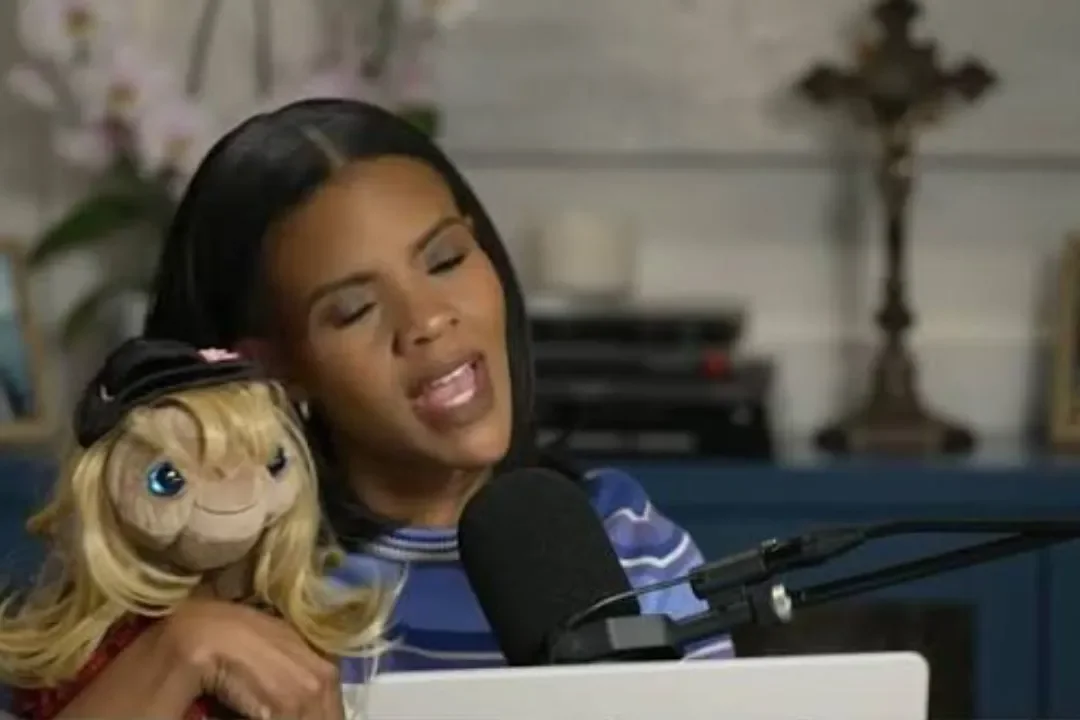
What makes this such a strange story to follow is that you can start off reading about a private conversation between two presidents and end up at a passage in an 88-count complaint about E.T. in a blonde wig. The Macrons’ lawyers describe the “Brigitte doll” Candace uses on her show as “a grotesque, alien-like figure”. I’m pretty sure I saw that exact same doll for sale at Universal Studios in Orlando when I was there. My favourite part was Candace issuing a statement on its behalf. “Brigitte-Doll will be making no further statements at this time.”
Russell Brand. A jury found Brand guilty of one count of rape and three counts of sexual assault against four women. On 9 November, he was sentenced to ten and a half years in prison. His wife subsequently read a message from him on their podcast in which he maintained his innocence and spoke about his faith. Then came the merchandise. A company linked to Brand was selling “Free Russell” T-shirts bearing his face for $34.99.
I think that’s absolutely despicable. Four women had just been through a criminal trial. Within days, people could buy a T-shirt presenting the man convicted of offences against them as someone being persecuted for speaking out. And it says something fairly grim about the idea of cancellation that, even after a rape conviction and a prison sentence, there was still someone who saw a merchandising opportunity.
Nvidia and Jensen Huang. On 8 November, Nvidia published a message from its founder and chief executive admitting he'd been unfaithful to his wife. The woman involved was reported to be an alleged Chinese spy, turning a personal scandal into a national security story. Days later The New York Times reported a second relationship, with an Nvidia vice president, and on 12 November Huang resigned.
The board's statement thanked him for his "profound" contributions without saying why he was leaving, and the company lost around $550 billion in market value in five days. Then, on 23 November, the board reinstated him, saying it was satisfied with his candour and his ability to lead, and appointed a new chief compliance officer. My take: the first apology came before the full story was out, so it was overtaken within days. Tell the whole truth once, early, rather than in instalments. And the comeback is the clearest example this year of who really decides: the board weighed the scandal against what he's worth to the company, and the company won.
David Walliams. On 10 November, ITV News and The Guardian reported allegations of sexual misconduct against David Walliams after his attempt to prevent publication was unsuccessful. He denies the allegations. The court heard medical evidence about his mental health, which matters when discussing why he sought an injunction.
From a press perspective, I think the attempt to keep the story private made it bigger. People were already speculating about his identity. By the time ITV and The Guardian could name him, even people who’d barely followed the case wanted to know whether they’d guessed correctly. The outlets could then publish both their original investigation and the account of what it had taken to get it into print.
I’ve worked with people in the public eye for years, and I’ve often been quietly advised who to avoid. The same names do sometimes come up. What that experience has taught me is how easily a story can be familiar to people in an industry long before a journalist is in a position to publish it. So the speculation didn’t surprise me. What struck me was how the months spent trying to keep his name out of the headlines gave people an extra reason to read them when it finally appeared.
Grand Theft Auto VI. By the time GTA VI came out on 19 November, “we got that before GTA 6” had become a joke you could make about pretty much any news story and people would know exactly what you meant. I do wonder how much free publicity Rockstar got out of taking 13 years to make a sequel. It reported $3.79 billion in retail sales on day one. Personally, I can’t wait for a few days off so I can sit down and play it.
Maldon Salt. I’m still buying it, especially the smoked one, but I did find this fascinating. The Observer reported that Maldon uses imported German rock salt in its production. Regulators had previously looked at the process and taken no action. Maldon acknowledged using rock salt in its Instagram response, although it left out the detail that seemed most likely to interest the people buying a product so closely associated with Essex. Where did the salt come from?
I’ve written a fuller case study about this because it’s such a good example of the gap between what a business has explicitly promised and what a customer reasonably takes away from its packaging. I don’t tend to stand in my kitchen conducting a forensic reading of the salt box. I see Maldon, I think of Essex, and I suspect the company has been quite pleased with that association over the years. It can hardly be surprised that customers cared about the German bit too.
The Shakespeare Institute. The University of Birmingham announced that it would move its Shakespeare Institute from Stratford-upon-Avon, where it had been since 1951, to its Edgbaston campus. Actors, alumni and thousands of petitioners objected, and four days later the university paused the move. Pausing was sensible. What surprises me is that anybody needed a petition to establish that people studying Shakespeare might have quite strong feelings about being in Stratford-upon-Avon. A few conversations before the announcement could have saved everyone a fairly exhausting four days.
So, does anyone really get cancelled any more?
Looking back, the story that answers that question best is Nvidia. Jensen Huang resigned in the middle of an international scandal and was back in the job eleven days later, because his board decided he was worth more to the company than the damage. Compare that with the Brooklyn shop at the centre of the Kelly Clarkson row. Its responses were pretty obnoxious, but it was still a small business taking abuse from thousands of people who'd never been through the door, with no board to decide the problem had gone away. The size of a headline tells you surprisingly little about who can afford to get past it.
From a PR point of view, that's what gets lost in arguments about cancel culture. Online anger is loud, but it has a short memory and very little power on its own. What actually decides how a crisis ends is whether the people with a financial stake in you stay: the board, the publisher, the retailer, the sponsor, the client. So when I'm advising someone in the middle of a storm, the first question usually isn't "how do we stop people talking about this?" It's "who do we need to keep, and what do they need to hear from us?" Very often the answer is a phone call, not a statement.
The other thing this year showed is that most crises aren't made worse by the facts. They're made worse by the response. A statement that defends a word instead of apologising for it, an apology for how people "felt" rather than for what you did, a lawsuit to stop a story that then becomes the story. None of those were inevitable. They happened because nobody stopped to read the words the way the people on the other end would read them.
The best responses this year had something in common: they did something rather than just saying something. When Timothée Chalamet said nobody cared about opera or ballet, the companies he'd dismissed simply invited him to come and see their work. It cost them nothing, and it made them look better than almost anyone else all year. That's what I'd want anyone facing a crisis to take from 2026. People forget what you said surprisingly quickly. They remember what you did for much longer.
If you’re dealing with something yourself
Most people who need PR advice haven’t had a call from Oprah and are unlikely to get one. More often, a journalist has emailed with a deadline, a customer has posted something that’s being shared locally, or something has gone wrong at work and you’re on your fifth draft of a reply that somehow gets longer every time you read it.
I wrote The Little Reputation Handbook for people in that position, particularly if hiring someone like me isn’t in the budget. It’s £45 and includes a 53-page guide, a Word document with 42 editable templates, a crisis plan and worksheets. You can read it in the privacy of your own home, skip straight to the bit that applies to you and come back to it whenever you need to. You’ll find it in The Little PR Shop on my website.
If you’d prefer advice based on your own circumstances, you can also book a one-off confidential session with me. Either way, if you’re currently six pages into an Instagram statement about your family, save it as a draft and have a cup of tea first.